Why Your E-Commerce Pages Aren’t Ranking
If you are trying to understand why your e-commerce pages aren’t ranking, you are not the only one facing this issue. Many online shops put time into their product descriptions, design and marketing, yet their pages still fail to appear in search results. Even when your products are strong, they can struggle to reach search engine result pages that potential customers actually use. This often happens because e-commerce websites face problems that go beyond simple keyword use. Technical issues, mismatched intent, duplicate content and weak user experience all play a part. If your website lacks depth, repeats identical content or fails to show authority, it becomes harder for search engines to trust it.
Search engines now focus heavily on helpful, original and technically sound pages. The guide below takes you through the most common reasons ecommerce pages fail to rank. It also explains how to fix each one so that your organic traffic can grow in a steady and reliable way.
Matching Search Intent Correctly
A major reason ecommerce pages fail to appear in search results is that the content does not match what the user hopes to find. Search engines look at every query and decide whether the user wants information, comparison guidance, a specific website or a product to buy. If your page format does not match this intent, it becomes difficult to rank.
For example, a search such as best running shoes for beginners usually brings up guides that compare several models. A single product page is unlikely to perform well in that situation. On the other hand, a search such as buy women’s running shoes size 6 indicates that the user is ready to purchase, and a category page or product page is the right fit.
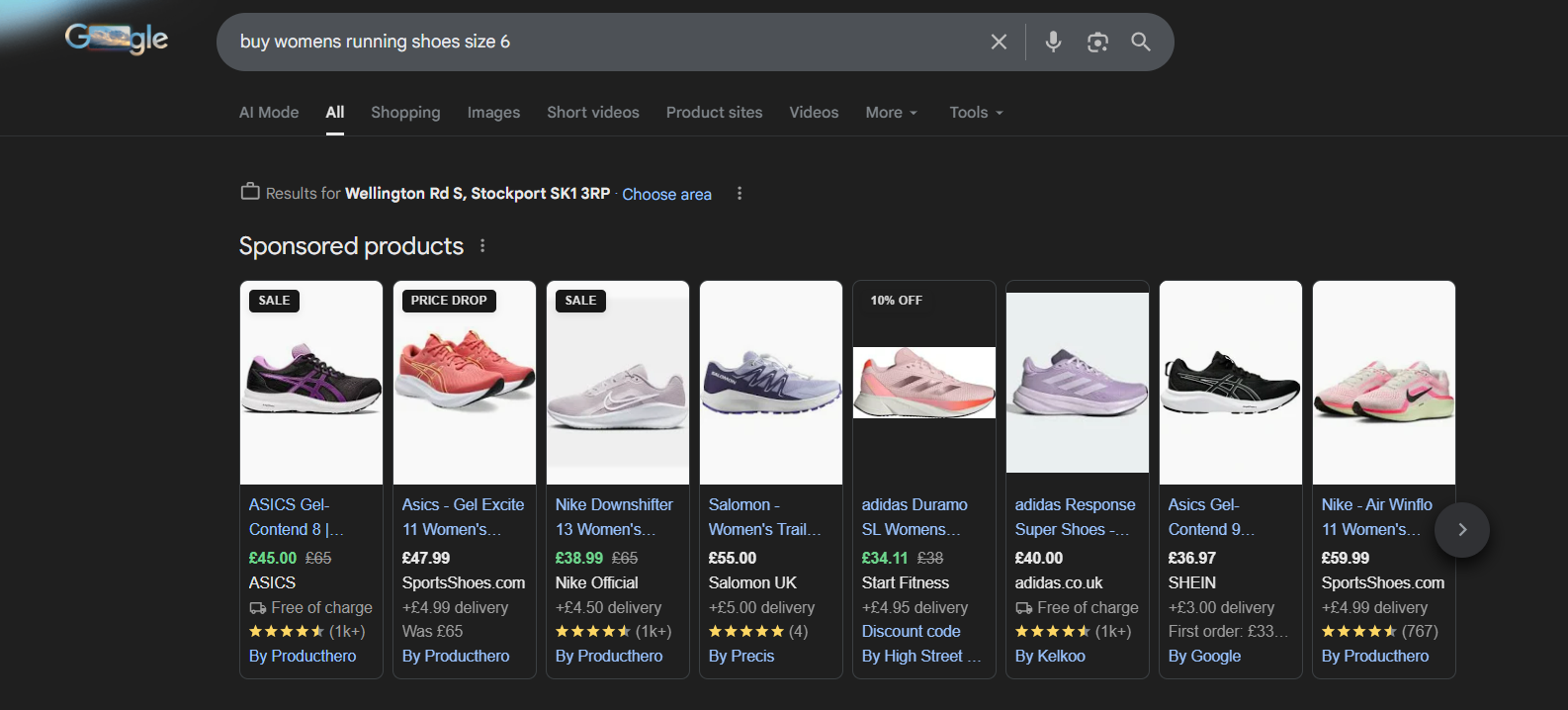
A practical way to understand search intent is to look at the top-ranking pages for your target keywords. If the first few results are long guides, your page will need more depth or a different structure. If the first few results show product listings, you know that a well-optimised transactional page will fit more naturally.
Targeting the Wrong Keywords
Many e-commerce websites rely on wording that makes sense internally but does not match real user searches. If customers describe a product differently, your keyword research may be holding you back. Focusing only on broad keywords also creates competition that newer or smaller websites cannot yet win.
Long tail keywords are often more effective. They have lower competition and match buying intent more closely, which usually results in stronger performance. Including these long tail keywords in product descriptions, titles and meta descriptions helps search engines recognise your relevance more clearly.
It is also important to review keyword difficulty and check whether large competitors dominate certain terms. Choosing target keywords that your website can realistically rank for makes a meaningful difference to visibility.
Thin or Unhelpful Content
Thin content is one of the biggest reasons why your e-commerce pages aren’t ranking. If a product description lacks depth, does not answer questions or could be applied to almost any similar item, search engines consider it low value. Many shops use manufacturer text or create short descriptions that offer very little guidance. Identical content across the web gives search engines little reason to show your page.
To improve this, make each description useful and relevant. Explain how the product helps the user, not just what it does. Add clear details, safety information, sizing help or examples of how the item is used. Category pages should also include helpful text that explains how customers can choose between different products. This supports keyword research, improves clarity and boosts trust.
Duplicate Content and Cannibalisation
Duplicate content confuses search engines. If several pages contain identical content, search engines cannot understand which one should rank. This is common in e-commerce when many product variations have the same description or when a category page and a product page compete for the same keywords. This leads to both pages performing poorly.
To fix this, try to place product variations on a single page whenever possible. If you must keep them separate, use canonical tags to show search engines which page is the main version. Rewrite descriptions so each page gives unique value and avoid repeating too much text between similar products.
Poor Internal Linking Structure
Internal links help search engines find and understand your pages. When a page has no internal links pointing to it, it becomes difficult to crawl and will often never rank. A strong internal linking structure guides both search engines and customers.

Category pages should link to products, product pages should link to related items and blog posts should link to the most relevant products or categories. Using clear and descriptive link text helps search engines interpret the topic more accurately and gives your important pages more authority.
Weak Metadata and Poor SERP Appeal
Meta titles and meta descriptions are still important for ranking and for getting users to click on your pages. If these are missing, duplicated or unclear, your click-through rate drops, which tells search engines that your page may not be relevant.
Each product and category page should have a unique and engaging meta description that includes the main benefit, the main topic and the target keywords in a natural way. Titles should be descriptive and reflect what the page actually offers. This creates a stronger match between search intent and search engines, and helps your pages stand out.
Unoptimised Images and Slow Loading Times
Large image files are a common cause of slow e-commerce websites. If the file size is too large, pages take longer to load, which harms user experience and reduces rankings. Many visitors simply leave slow pages, which contributes to lower engagement.

Compressing images, converting them to modern formats and resizing them correctly will speed up your site. Adding descriptive alt text also helps search engines understand what is shown in the image, improving visibility in image-related searches.
Crawling and Indexing Problems
If search engines cannot crawl or index your pages, none of your optimisation work will matter. This is why checking your site in Google Search Console is so important. You may discover blocked pages, errors, incorrect redirects or issues with your sitemap.
Make sure your robots.txt file does not block important pages and confirm that your sitemap lists all pages you want indexed. Resolving crawl issues gives search engines access to your content and increases your chances of being shown in search results.
Lack of Authority and Backlinks
Backlinks help search engines measure trust. If your website has very few incoming links, it will struggle to build authority, especially in competitive sectors. While link building cannot be forced, you can encourage natural links by creating content that people want to reference.
Buying guides, comparison articles, helpful resources and original insights all attract attention from bloggers, journalists and industry websites. When others link to your content, search engines see this as a sign of credibility.
Poor User Experience
User experience affects rankings more than many website owners realise. If your site is difficult to navigate, slow, unclear or unhelpful, users will leave quickly. This sends negative signals to search engines.

Improving user experience involves clear layouts, simple navigation, mobile responsive design and fast loading speeds. If customers find what they need quickly and enjoy using your site, this improves your organic traffic and conversion rates.
Weak Product and Brand Trust Signals
Trust plays an important part in search engine assessments. If your pages have no reviews, no social proof and no details about your policies, users may hesitate to buy. This reduces conversions and makes your site appear less credible.
Adding genuine reviews, clear return policies, delivery information and helpful FAQs strengthens trust. User-generated content, such as customer photos or testimonials, also adds value. These elements help both users and search engines understand that your business is reliable.
Unhelpful URL Structure and Site Architecture
Messy URLs or confusing site layouts make it harder for search engines to understand your content. URLs full of numbers or random parameters do not communicate meaning. A clean, descriptive URL gives search engines and users instant clarity.
Strong site architecture also helps search engines identify which pages are most important. When category pages, subcategories and product pages follow a logical order, crawling becomes more efficient.
Missing Schema Markups
Schema markups give search engines extra information about your products, such as price, availability, reviews and brand. This helps your pages appear more clearly in search results and can unlock rich snippets that stand out to users.
Adding structured data to your product and category pages makes it easier for search engines to present your content correctly. This can increase your visibility and improve click-through rates.
Bringing Everything Together
When you analyse why your e-commerce pages aren’t ranking, you may find several issues working together. Technical problems, content weaknesses, lack of authority and poor user experience all contribute to low visibility. The most effective way to improve is to fix technical issues first, then strengthen content, then improve internal links and finally build trust signals. Once these areas work together, your website can begin to grow consistently.
Conclusion
Understanding why your ecommerce pages aren’t ranking helps you avoid guesswork and focus on the areas that make the biggest difference. By improving your content, user experience, technical setup and trust signals, you create a solid foundation for long-term growth in organic traffic. If you need support improving your e-commerce performance or identifying the issues holding your pages back, get in touch to explore how focused SEO guidance can help you move forward.