How to Do Keyword Research for Your Website
Understanding how to do keyword research for your website is one of the most important skills in modern digital marketing. It shapes everything from the traffic you receive to the quality of visitors who eventually convert. Although search engines and search behaviour have evolved, the foundations of how to do keyword research remain essential, and businesses that learn this discipline are far more likely to succeed.

Keyword research is no longer about stuffing pages with obvious search terms. It is a strategic process that helps you understand what your customers are searching for, why they are searching and where they are in their buying journey. By uncovering these patterns, you can create content that matches what users need and guide them from initial interest to confident action.
This guide explains the entire process in detail. It answers what keyword research is and why it matters, how to find keywords your audience is already typing into search engines, which keywords are worth targeting and which ones are best avoided. The goal is to give you a practical and thorough roadmap that you can apply to your blog post strategy, product pages and overall website architecture.
What Keyword Research Really Means and Why It Matters
Keyword research is the process of discovering and analysing search terms that people use online. A search query can be a word or phrase entered into a search engine such as Google, an AI tool, a video platform like YouTube or even a social search environment like TikTok. Understanding the search terms your audience uses allows you to create content that meets their needs, aligns with their stage of awareness and positions your website as an authoritative resource.
There are several reasons keyword research matters.
It helps you understand your customers. When you explore the questions your audience asks and the language they use, you gain valuable insight into their problems, goals and frustrations. This information is far more accurate than traditional guesswork because it reflects genuine behaviour. Instead of assuming what matters, you learn directly from what people type.
Keyword research also helps shape your content strategy. Rather than choosing topics at random, you identify what your target audience cares about. This improves the performance of every blog post because your content is linked directly to real demand.
It also plays a vital role in ranking decisions. Search engines want to show accurate, relevant and helpful results. When your content reflects genuine search behaviour and uses keywords naturally within high-quality pages, your visibility increases.
Finally, keyword research helps ensure your content supports business goals. It does not make sense to attract thousands of irrelevant visitors. It makes far more sense to target keywords that bring people who genuinely need your services.
Put simply, keyword research helps you attract the right audience at the right time with the right content.
How Search Behaviour Has Changed
Search behaviour has expanded well beyond traditional search engines. Although Google remains dominant, users are increasingly turning to conversational platforms, AI tools and social environments to get answers. Younger demographics often begin their searches on TikTok or YouTube, and many shoppers now use AI to refine purchase decisions.
This shift highlights the importance of understanding intent rather than focusing solely on specific keywords. People may phrase questions differently depending on the platform, but their underlying need remains the same. When you put yourself in the shoes of your customers, you begin to recognise that keyword research is really audience research.

Another important development is the rise of zero-click results. Google often answers questions directly in the search results through panels, featured snippets or AI overviews. As a result, high search volume does not always guarantee traffic. Businesses must be selective and consider which search terms still produce clicks and which keywords might serve better as supporting content rather than core traffic drivers.
Despite all these changes, keyword research remains fundamental. The challenge is learning how to do keyword research for your website in a way that reflects modern search behaviour, intent and competition.
How to Find Out What Your Customers Are Searching For
The most effective way to find keywords is to begin with your audience. An excellent starting point is identifying the questions customers ask you regularly. Conversations with your sales or support teams can reveal patterns and common concerns. These often form the basis of strong content, especially when supported by data.
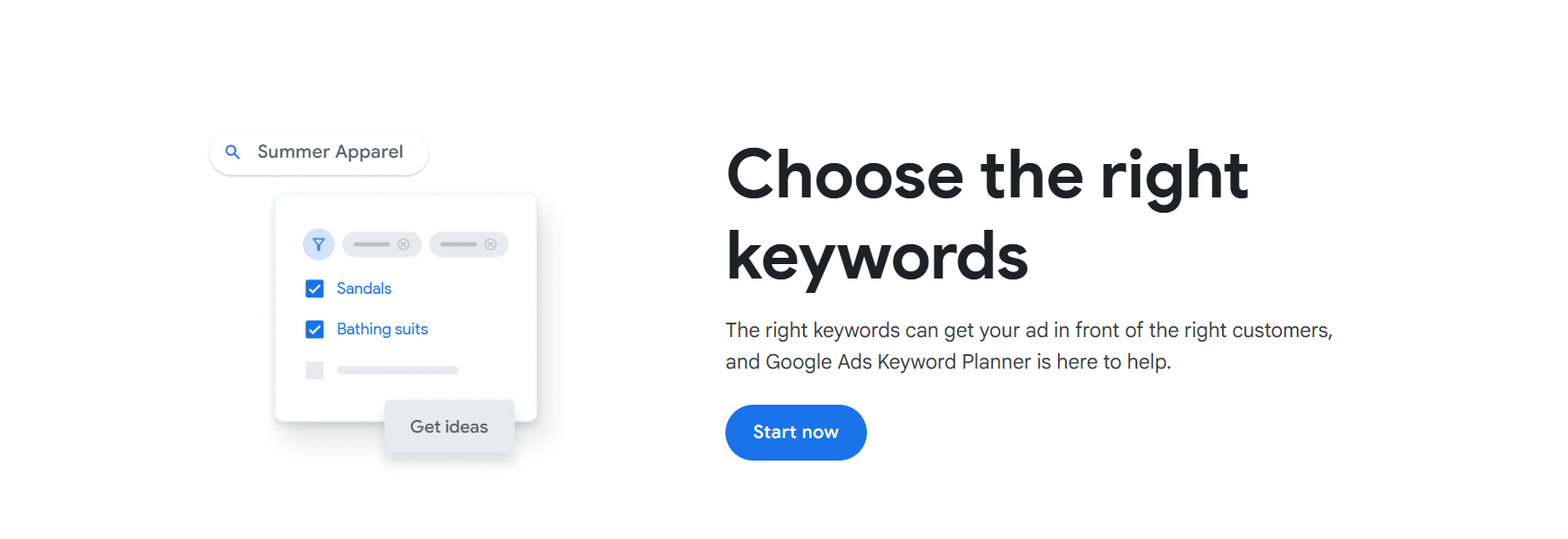
However, direct conversations are only one part of the process. You also need to use keyword tools. A free tool such as Google Keyword Planner can help you discover search terms related to your products or services. Although this tool is designed for advertisers, it provides a useful list of keywords, monthly search volume ranges and related ideas. Many businesses use Google Keyword Planner as a starting point before moving into more advanced platforms.
Google Trends is another helpful resource. It does not show precise monthly searches, but it does reveal how interest in a word or phrase changes over time. This is especially useful when dealing with topics that spike at a specific time of the year, such as seasonal events or industry cycles. If you know when demand rises, you can create content in advance.
You can also explore social platforms, YouTube suggestions, Reddit discussions and niche forums. These communities often reveal real language and practical concerns. When several people ask the same question in a forum, it usually indicates a gap that content can solve. By combining this behaviour with keyword research tools, you can confirm whether the question has enough demand.
Through these methods, you begin to assemble a list of keywords that reflect real behaviour, not assumptions.
How to Decide Whether a Keyword Is Worth Targeting
When building your keyword list, it is important to evaluate the value of each keyword rather than simply chasing high numbers. Three main factors determine whether a keyword is worth targeting: popularity, difficulty and relevance.
Popularity refers to how many people search for the keyword. Monthly search volume helps you understand demand. A keyword with 5,000 monthly searches may look attractive, but if it is extremely competitive or irrelevant to your business, it is not a good choice. A keyword with fewer monthly searches can be more valuable if it matches what your audience needs and has realistic ranking potential.
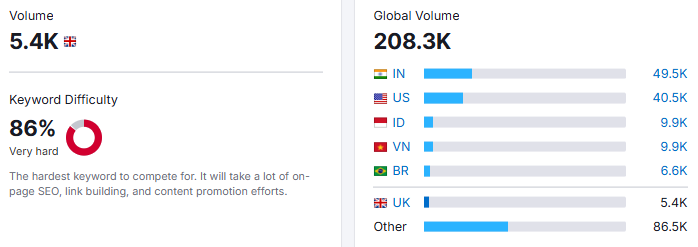
Difficulty is the measure of how challenging it is to rank on the first page. Keyword difficulty tools consider the authority of the websites already ranking, the strength of their backlinks and the overall competitiveness of the topic. If all top results are dominated by major brands with strong authority, a newer website may struggle to compete. In this case, targeting a more specific keyword could be a smarter strategy.
Relevance is often the most important factor. The search intent behind a keyword determines whether the keyword truly matters to your business. Informational intent means the user wants to learn something. Transactional intent means they are ready to take action. Commercial intent sits in the middle, where the user is comparing their options.
If you choose a keyword that does not match your audience or your goals, you will not see meaningful results. High traffic does not always lead to conversions. This is why relevance must be considered alongside popularity and difficulty.
There are also keywords you should avoid. Targeting irrelevant topics simply because they have high search volume can dilute your authority and attract the wrong visitors. If a search query does not align with your offering or cannot be served by your content, it is better to exclude it.
How to Begin the Keyword Research Process
The first practical step is identifying seed keywords. These are broad search terms that describe your business, your products, your topics or your industry category. If you run a fitness website, your seed keywords might include fitness tips, home workouts or healthy meals. If you offer consulting services, your seed terms might include business growth, financial management or leadership coaching.
Once you have your initial seed keywords, you can enter them into keyword tools. Each tool will generate a list of related keywords, questions and long tail keywords. Long tail keywords contain more specific wording, often three or more words. They usually have lower competition and reflect more focused user intent. Someone searching for coffee could be looking for anything, but someone searching for the best coffee machine under £200 is far more specific and likely closer to making a decision.
This stage of gathering ideas should be generous rather than restrictive. Your aim is to build a broad list of keywords. You can refine, filter and evaluate them later.
Using Keyword Tools to Expand Your Ideas
To deepen your keyword research, you will need a combination of free tools and advanced paid platforms.
A free tool such as Google Keyword Planner provides keyword ideas alongside suggested bid ranges, search volume estimates and related keywords. Although the monthly search volume ranges are broad, they still help you understand relative demand.
Google Trends helps you determine whether a keyword is stable, growing or declining. If interest in a topic is falling sharply, you may decide to focus elsewhere. If it peaks at a specific time of the year, you can schedule content accordingly.
Paid platforms such as Semrush, Ahrefs or Mangools offer deeper insight. They provide accurate monthly searches, keyword difficulty scores, competitive landscape analysis, click data, SERP features and competitor keyword reports. You can discover which keywords your competitors rank for, which keywords they are missing and which keywords produce actual clicks rather than zero click results.
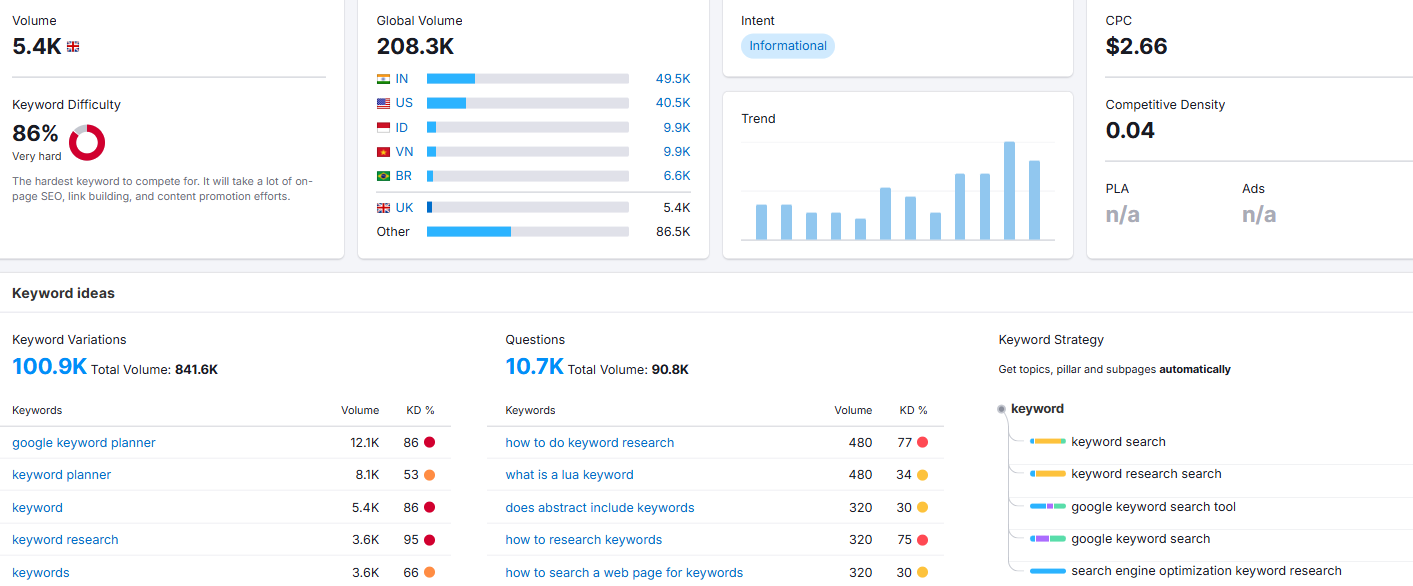
The goal is to collect a thorough list of keywords, supported by data and aligned with your audience’s behaviour.
Understanding Search Intent
Search intent helps you understand what the user wants from their search. There are four main types.
Informational intent means the user is looking for answers or guidance. These searches often begin with how to, why, what or when. A blog post is usually the best format for informational intent.
Navigational intent means the user wants to reach a particular website or brand. These searches often involve the name of a company or tool. They do not usually require optimisation unless you want to strengthen your branded presence.
Commercial intent means the user is comparing products or evaluating options. They may not be ready to buy, but are moving closer. These searches often feature terms such as best, top or review.
Transactional intent means the user is ready to take action, such as making a purchase or submitting an enquiry. Product pages or service pages usually target these keywords.
Understanding intent prevents wasted effort. For example, if a keyword has commercial intent, creating a long educational article may not be the most effective format. Instead, a comparison guide or product page might be more appropriate. Matching format to intent improves both rankings and conversions. We have a blog on search intent if you want to learn more about this topic in depth.
Analysing the SERP to Understand Competition
Once you have gathered potential keywords, you should analyse the search results page for each one. This process reveals far more than basic keyword metrics. It tells you exactly what search engines believe users want.
Begin by searching for the keyword in an incognito browser. Look at the types of content appearing on the first page. If the top results are guides, tutorials or blog posts, then informational content is appropriate. If they are product pages, your blog will not satisfy the intent.
Check whether the results are dominated by large authoritative websites. If they are, it may be difficult to outrank them. If smaller websites appear on the first page, the competition may be more balanced.
Look for SERP features such as featured snippets, images, videos, or People Also Ask boxes. These features absorb clicks and can change how users engage with results. Understanding them helps you craft content that either competes for these positions or complements them.
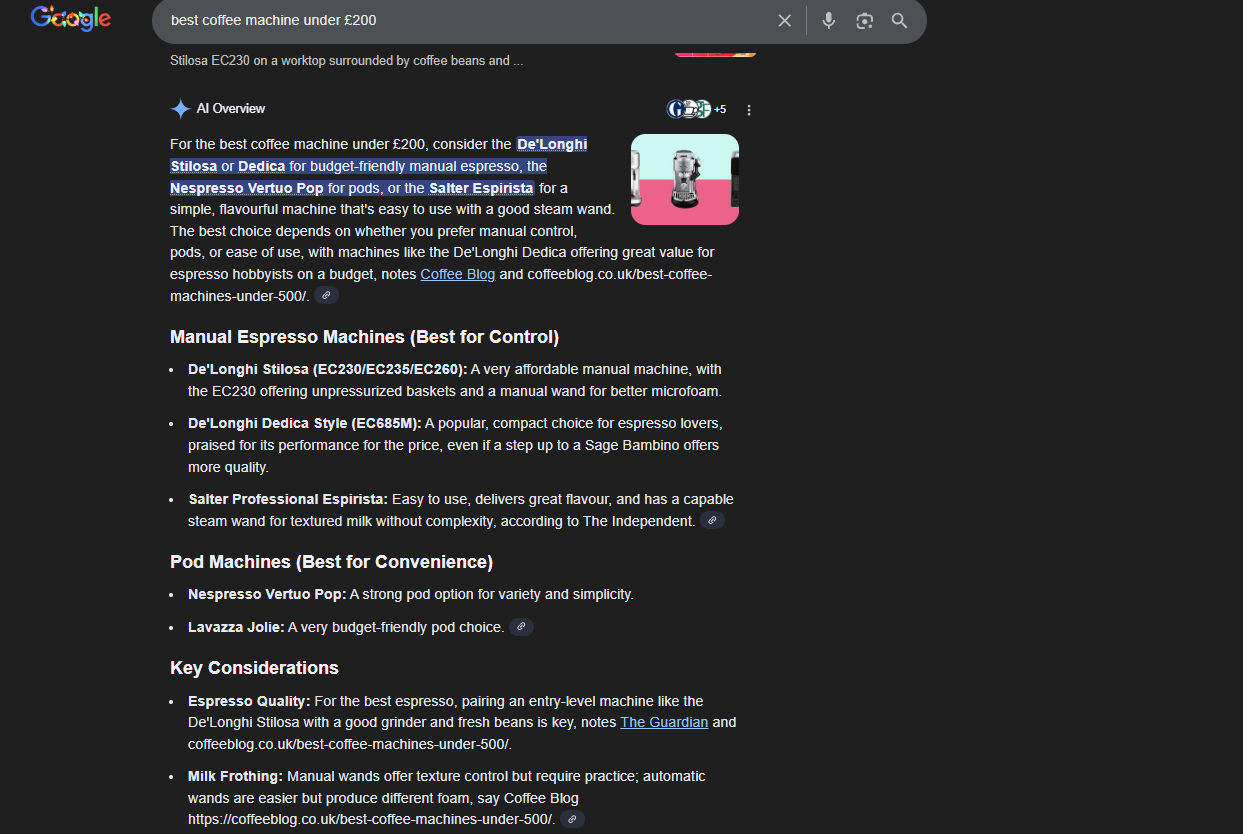
This stage allows you to decide whether a keyword is worth pursuing based on real competitive conditions rather than theoretical difficulty scores.
Grouping and Clustering Your Keywords
After analysing your keyword list, you will notice themes and recurring patterns. Several keywords may differ in wording but share the same intent. This is where keyword clustering becomes important.
Keyword clustering involves grouping related keywords that can be served by the same content. Instead of writing multiple pages for similar search terms, you create one strong page that covers the topic comprehensively. Search engines reward this because it demonstrates depth and topical authority.
For example, the keywords how to start a blog, how to start a blog post and steps to starting a blog all revolve around the same intent. A single detailed guide can rank for all of them. A scattered approach with several thin pages would dilute your authority.
When clustering your list of keywords, consider the parent topic, the search intent and the competitive landscape. This process helps you create a structured content plan that meets user needs without duplication.
Mapping Keywords to Pages
Once your clusters are clear, you can begin mapping keywords to specific pages. Each page should have one primary keyword and several supporting keywords. The primary keyword reflects the main search intent, while supporting keywords help strengthen relevance and broaden visibility.
Mapping prevents keyword cannibalisation. When multiple pages target the same keyword, search engines become uncertain about which one to rank. By assigning keywords intentionally, you ensure clarity and maximise ranking potential.
Create a spreadsheet that includes your primary keyword, its monthly search volume, difficulty, intent, target page type, supporting keywords and priority level. This map becomes a living document that guides content creation across your website.
Competitor Keyword Insights
Competitor keyword research helps you understand what is already working in your industry. If a competitor consistently ranks for certain topics, those topics likely have strong relevance. Examining their blog post strategy can reveal opportunities and gaps.

If your competitor has a high ranking for a keyword you are targeting, study their content. Look at what they cover, how the page is structured, the depth of information provided and how well the content aligns with search intent. This analysis will show you how to produce something more helpful and comprehensive.
There will also be keywords your competitors are not targeting. These untapped keywords can be valuable opportunities. You may uncover long tail keywords that serve highly specific needs, which often lead to higher conversions.
Evaluating Keywords You Should Avoid
Not every keyword is worth pursuing. Some keywords attract the wrong audience. Others are so broad that they deliver low-quality traffic. Very high volume terms often have intense competition and may not be suitable for smaller websites.
Avoid keywords that do not match your content or services. If a keyword does not align with user intent or business goals, it will not contribute to meaningful outcomes.
Also, avoid targeting too many informational keywords without a strategy to guide users toward deeper engagement. Informational content should support your broader goals, not distract from them.
How AI Has Changed Keyword Research
AI has introduced new dynamics to keyword research. Modern search engines use semantic understanding to interpret meaning rather than rely solely on individual terms. This means you no longer need to optimise for every variation of a keyword.
AI tools also influence how people phrase queries. Natural language prompts are becoming more common, and long tail keywords are increasing as users become more conversational.

AI-powered results also affect click behaviour. Some queries receive direct answers through AI summaries, reducing organic clicks. To remain competitive, your content must provide depth and clarity that AI cannot fully replicate.
Despite these changes, keyword research remains essential. Businesses must identify topics where they can provide unique value, align content with user needs and build authority within their niche.
A Complete Example Keyword Research Workflow
Below is an example of a keyword research process you could follow. Imagine you are researching keywords for a company offering leadership coaching.

This complete workflow ensures your keyword research is thorough, data-driven and aligned with user needs.
How Often You Should Review Keyword Research
Keyword research is not a one-time activity. Search behaviour, competition and interest change over time. Review your keywords regularly to ensure they remain relevant.
Quarterly reviews are suitable for most industries. Fast-moving sectors may benefit from monthly analysis. Annual deep reviews allow you to reassess your broader strategy, find new opportunities and adjust to emerging trends.
When new products or services launch, fresh keyword research is essential. You must also review your keyword map whenever customer behaviour changes or new competitors enter the market.
Common Mistakes to Avoid
Several common mistakes can undermine your keyword strategy if not identified early.
Do not rely solely on high search volume. A keyword may attract many visitors but offer low relevance. Prioritise intent over volume.
Avoid duplicating content. Multiple pages targeting the same keyword can confuse search engines and weaken rankings.
Do not ignore SERP features. If a keyword triggers a featured snippet or video panel, you may need to adjust your format.
Avoid prioritising keywords that your website cannot realistically rank for. Targeting overly competitive terms can waste time and resources.
Finally, avoid guessing what your customers want. Use data, conversations and keyword tools to understand their real needs.
Conclusion
Learning how to do keyword research for your website gives you a deeper understanding of your audience, strengthens your content strategy and increases your ability to attract meaningful traffic. When you find keywords that reflect genuine intent, match them with well-structured content and maintain consistency across your website, you build long-term visibility and authority.
This guide has outlined every stage of the process, from discovering what customers are searching for to mapping keywords to pages and avoiding common pitfalls. The most effective keyword strategies combine data, real audience insight, competitive understanding and thoughtful content planning. With these methods, you can improve search performance, strengthen customer engagement and support your wider business objectives.
If you want to refine your keyword strategy, strengthen your search presence or improve your content performance, our team can help you develop a targeted plan that aligns with your goals. Reach out to learn how we can support your next stage of growth.