How to Include Keywords in Blogs for My Business

Publishing blog posts is one of the simplest ways for a business to start building an online presence, but many business owners struggle with how to use keywords properly. You might already know that keywords help you appear higher in search engines, yet understanding exactly where to place them and how to use them naturally is not always straightforward, especially for beginners. This guide explains everything you need to know in plain, practical language so you can create content that drives more traffic to your blog and helps potential customers find you.
Why Keywords Matter in Blog Content
Before diving into placement, it helps to understand why keywords matter in the first place. When someone types a search query into Google, the search engine scans billions of pages to find the most relevant matches. Keywords, which are the words and phrases that appear within your blog content, act as signals that show Google what your page is about. If Google can clearly understand your topic, it is far more likely to show your article in the search engine results.
For a small business, using the right search terms can be the difference between people discovering your website or never knowing your services exist. Keywords help search engines connect your content to users who are actively looking for information, answers, products or solutions. The more relevant keywords you incorporate naturally, the stronger your chances of appearing where potential customers are searching.
Keywords also support user experience because they make your writing clearer and more focused. When your content answers what searchers are looking for, readers stay longer, explore your site and are more likely to trust your business. This combination of search engine optimisation and improved user experience helps you build credibility over time.
Understanding the Different Types of Keywords
To use keywords effectively, it is important to recognise the difference between various types of search terms. For beginners, the main categories you need to know are:
Focus keyword
This is the main keyword your blog post is targeting. Every blog should have one clear focus keyword so Google knows the central topic of your content.
Secondary keywords
These are related search terms that support your main focus keyword. They help search engines understand the wider context of your content and allow you to rank for variations.
Long tail keywords
These are longer and more specific phrases that usually have lower search volume but higher intent. For example, the word “plumber” is broad, but “emergency plumber in Manchester” is a long tail keyword that attracts people who are ready to take action. Long tail keywords are extremely useful for small businesses because they face less competition and capture more targeted traffic.
Understanding these keyword types helps you choose the right combination for each article you create and improves the chances of search engines understanding your content.
How to Choose the Right Keywords for Your Blog Posts
Many business owners start writing before deciding which keywords to target. However, the most effective blog content begins with keyword selection. Choosing the right keywords ensures your article aligns with what people are actually searching for.
To find keywords, you can use simple keyword research tools such as Google Keyword Planner, Google Trends or other beginner-friendly platforms. These tools show useful information such as search volume, difficulty level and related search terms. Even if you do not use professional tools, you can still find strong keyword ideas using Google’s autocomplete suggestions, the “People Also Ask” section or by typing a basic phrase and noting what appears in the results.

When choosing keywords, think about what your customers usually ask, what people search before buying your product or service and what problems your business solves. If you sell services locally, combine your keyword with your location. If you offer a specialist product, look for long tail keywords that show clear intent. Once you have your focus keyword and three to five supporting phrases, you can begin structuring your blog post.
Matching Keywords to Search Intent
Search intent is simply the reason behind a user’s search query. In other words, what someone actually wants to achieve when they type something into Google. There are a few main types of intent such as learning something, comparing options or making a purchase. For this article, the intent is informational because readers want guidance on how to use keywords.
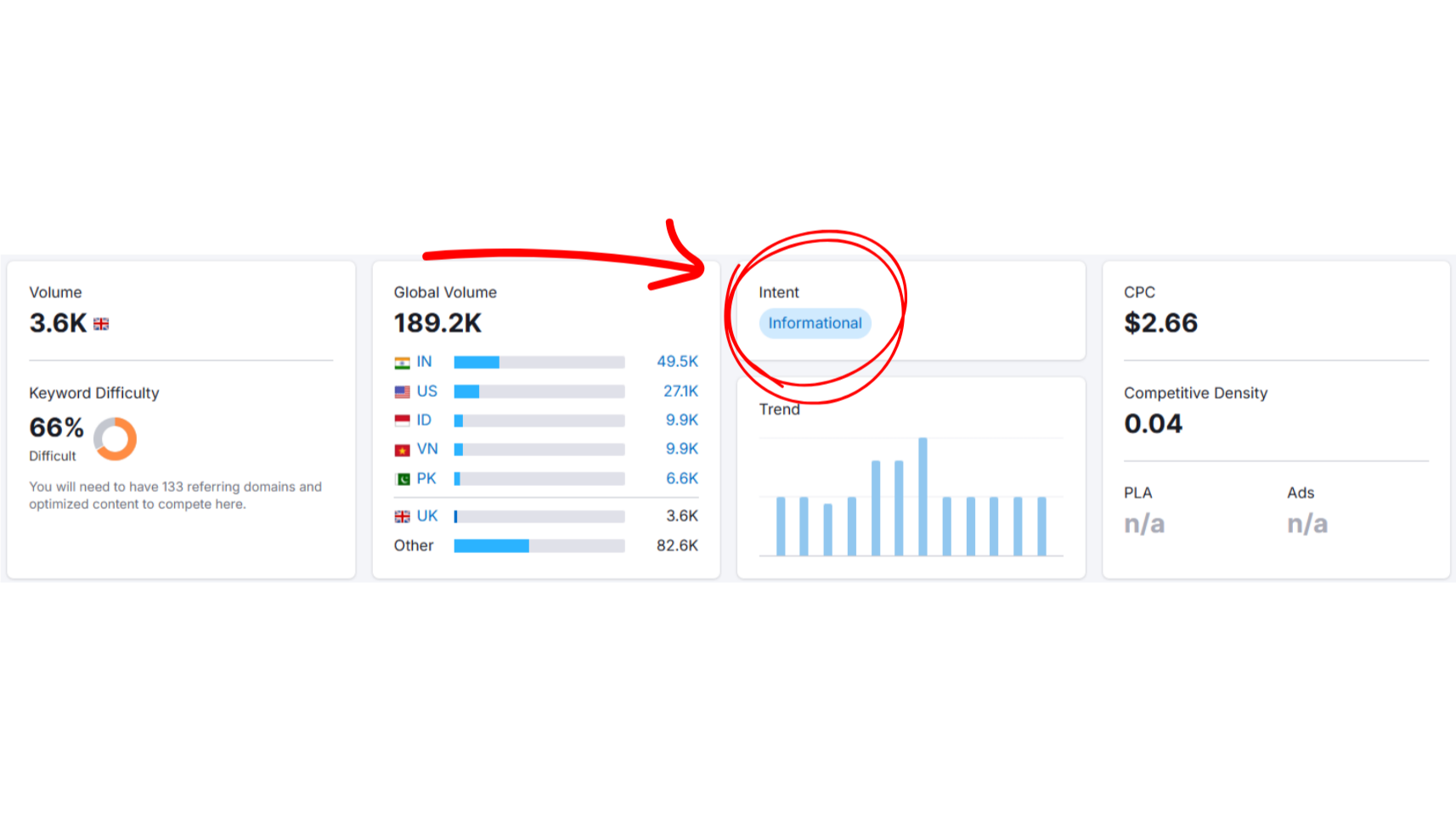
You do not need to go into deep analysis when starting out. The important thing is to make sure your blog post genuinely answers the question people are searching for. If the keyword shows that someone wants information, focus on educating them. If it suggests they are close to buying, your content should gently guide them toward the next step.
If you want a more detailed explanation of search intent and how it influences your content strategy, you can read our full article on the topic.
Where to Include Keywords in Your Blog Posts
Once you have chosen your keywords, the next step is placing them strategically throughout your blog content. The goal is to make your writing clear and relevant without forcing keywords where they do not fit. This helps search engines understand your article and supports a better user experience.
1. Use Your Keyword in the Blog Title (H1)
Your blog title is one of the strongest indicators of what the post is about. Including your focus keyword here helps both humans and search engines understand your article clearly. For example, “How to Include Keywords in Blogs for My Business” signals the intent of the page instantly.
2. Add the Keyword to the URL Slug
Your URL should be simple and readable. For instance:
/how-to-include-keywords-in-blogs-for-my-business
Short and descriptive URLs help search engines categorise your content more accurately.
3. Include Keywords in Your Meta Title and Meta Description
The title meta and meta description often appear before users click on your page in search engine results. Including your keyword in both elements increases relevance and encourages users to choose your page.
A good meta description uses your keyword once and explains the value of your article in a natural and engaging way.
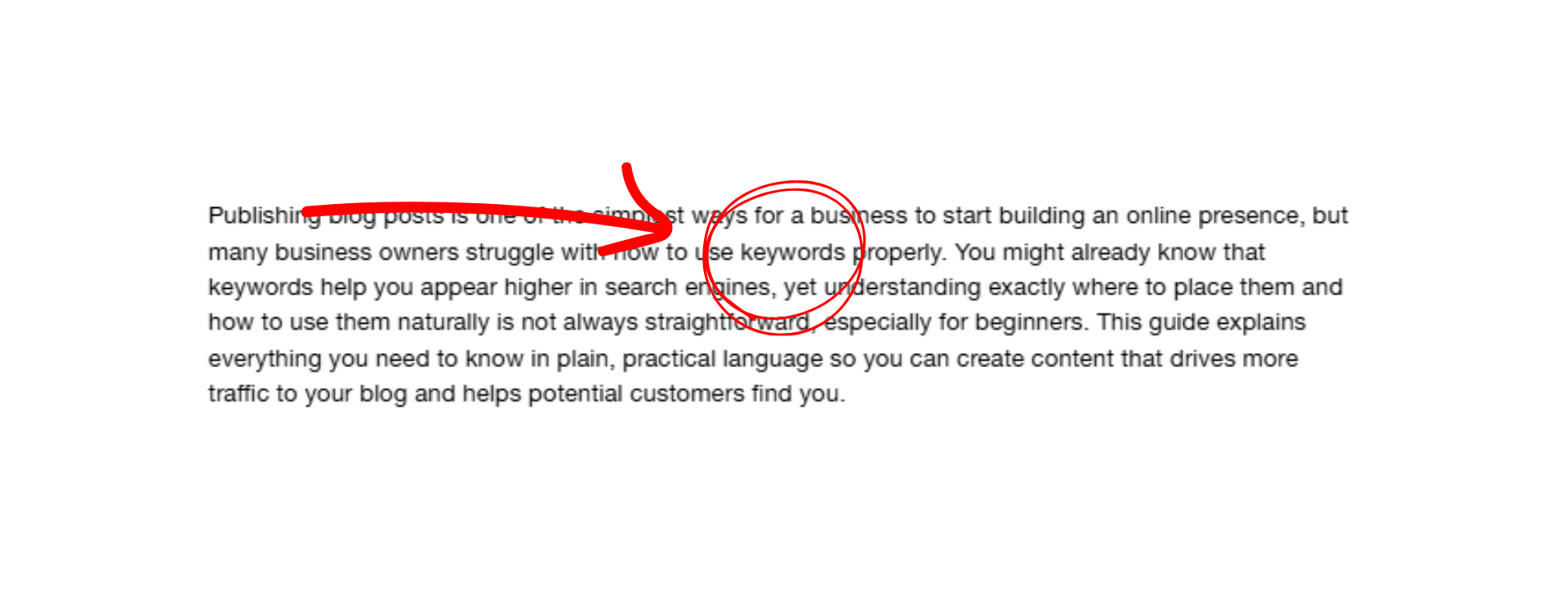
4. Place the Keyword in Your Introduction
Search engines scan the first paragraph to understand your topic. Including your focus keyword early signals clearly what the article covers. This also reassures readers that they are in the right place.
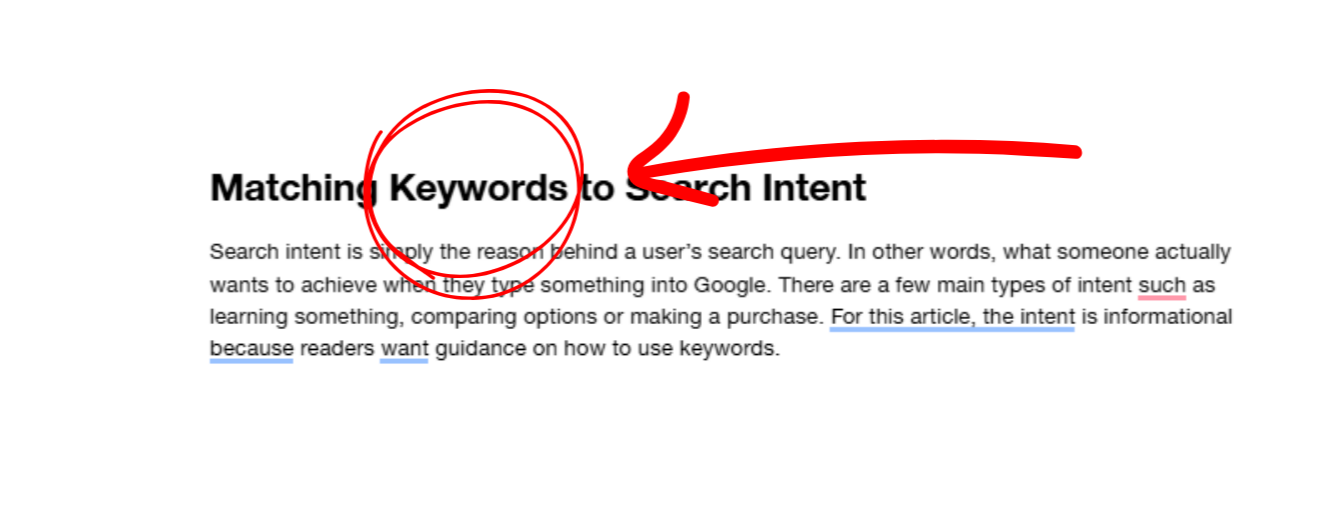
5. Add Keywords to Headings and Subheadings
Headings help structure your article for readability and allow search engines to interpret your content more accurately. Including relevant keywords in some of your H2s and H3s strengthens your SEO and provides clarity.
6. Use Keywords Naturally Throughout the Body
Your writing should always sound natural. Do not repeat the exact same phrase many times because this can lead to keyword stuffing. Instead, use natural variations and related terms. Reading your sentence aloud is a simple way to check whether your wording sounds forced.
7. Optimise Images with File Names and Alt Text
Images provide another opportunity to reinforce your topic. Rename image files with descriptive names and use alt text that includes a relevant keyword where appropriate. Alt text also helps users who rely on screen readers.

8. Add Internal Links with Descriptive Anchor Text
Internal links help search engines and readers navigate your site. Using descriptive anchor text such as “learn more about keyword research tools” is far more useful than “click here”. This strengthens your topical authority and helps readers understand what they will find when they click.
9. Mention the Keyword in Your Conclusion
Summarising your message with one final use of your main keyword helps reinforce the topic and gives your article a strong finish. Adding a gentle call to action encourages readers to continue exploring your business.
How Often Should You Use Keywords
A common beginner question is how many times a keyword should appear in a blog post. There is no perfect number. A useful guideline is to mention the focus keyword a few times in key locations and then use related keywords naturally throughout the rest of the content. Overusing keywords can lead to keyword stuffing. This harms your SEO and results in poor readability.
As long as your writing sounds natural, provides value and clearly answers the reader’s search query, you are on the right track.
Tailoring Keyword Use for Your Business
Every business has different goals, so your approach to keyword use will depend on what you offer. If you run a local service business, long tail keywords combined with location modifiers often work best. If you run an online shop, you may target product-specific keywords that match what customers search for before buying.
Think about the customer journey. Some blog posts will help people understand a problem, while others guide them towards choosing a solution. The keywords you use should match the stage of the journey you are targeting. This ensures your blog content supports your wider business goals.
Updating Old Blog Posts with Better Keyword Placement
Many businesses have older blog posts that do not perform well simply because they were written without SEO in mind. Updating them with improved keyword placement can significantly increase traffic to your blog without writing new content from scratch.

You can start by checking your search console data to see which pages already get impressions but few clicks. This suggests where keyword improvements could help. After identifying a focus keyword, update your title, headings, meta description and body content. Review the structure, add clarifying examples and improve readability. Once updated, track results using Google Analytics to see how the post performs over time.
Common Mistakes to Avoid When Using Keywords
Beginners often face predictable challenges when learning search engine optimisation. The most common include choosing keywords with high search volume but unrealistic competition, targeting too many unrelated keywords in one article, using keywords unnaturally, ignoring search intent, forgetting to optimise meta description and alt text and writing content that does not fully answer the search query.
Avoiding these mistakes ensures your articles remain helpful, relevant and trustworthy.
Quick Beginner-Friendly Checklist
Here is a simple checklist you can refer to each time you write new blog posts.
Focus keyword established.
A handful of related secondary and long tail keywords chosen.
Keyword included in the title, URL, introduction, one or two headings, meta description and conclusion.
Natural variations used throughout the content.
No keyword stuffing.
Images optimised with alt text.
Descriptive internal links included.
Content that fully helps the reader.
Conclusion: Start Using Keywords with Confidence
Learning how to include keywords in your blog content is one of the most valuable skills you can develop as a business owner. You do not need to be a technical expert to appear higher in search engines. You simply need to understand how to choose relevant keywords, match them to search intent and place them naturally throughout your article. With practice, this becomes a simple and powerful habit that increases traffic to your blog and helps your business reach the right people.
If you would like expert support in developing a stronger search engine optimisation strategy or want help creating content that performs consistently, our team at Perpetual10 can guide you. We help businesses build momentum online, and we would be happy to show you how effective keyword-driven content can transform your visibility.